
Streets, school zones and town centres
Intelligent Pedestrian Crossing
Smart pedestrian crossing systems for safer, accessible streets
The crossing that lights up the moment someone steps towards it, so drivers see them in time. A detector senses the pedestrian, lights in the road and on the signs start flashing, and an audible cue guides blind pedestrians.
1 named project
Smart pedestrian crossings for the Municipality of Trikala
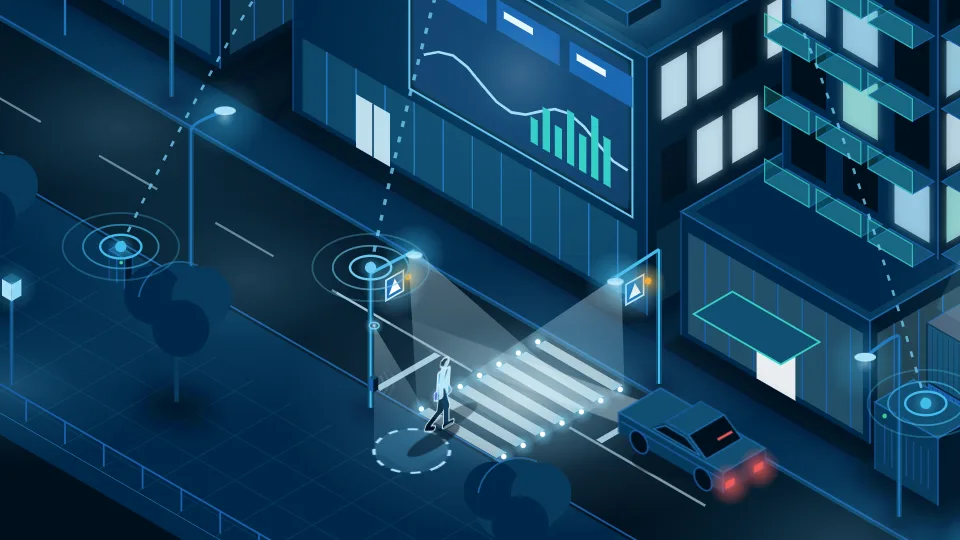
A detector at the kerb senses a person before the first step onto the road.Lights in the road surface flash along the zebra while someone crosses.Signs and amber beacons flash at both ends of the crossing.A floodlight lights the zebra and the person on it.An audible cue tells blind pedestrians when it is time to cross.
Where it fitsPlaces where people cross, and drivers need to see them
- School zonesChildren crossing before and after school.
- Near hospitals and clinicsOlder people and patients, who may cross slowly.
- Town centres and tourist areasVisitors crossing streets they do not know.
- Busy streets at nightWhere a pedestrian is hardest to see after dark.
It can run on the same control screens as our street lighting. Intelligent Street Lighting
Delivered forMunicipality of Trikala, smart pedestrian crossingsSee the dashboard
The problem
Crossing the street should not be a risk
At an ordinary zebra crossing, drivers do not always see a pedestrian in time: at night, in the rain, or when the person is a child or uses a wheelchair. The crossing itself gives no warning and no feedback, and the municipality has no data on how it is used.
- Pedestrians are hard to see at night and in the rain.
- Nothing warns the driver that someone is about to cross.
- No data on how many people cross, or when.
Industry context
12%
Pedestrians were 12% of the 664 people killed on Greek roads in 2024.
Older people made up 62% of the pedestrians killed. Hellenic Statistical Authority (ELSTAT) data, analysed by the NTUA Road Safety Observatory.
Outcomes
What you gain
Four things a municipality gets from a crossing that reacts: drivers who see, access for everyone, data to plan with and faults you hear about first.
Drivers see the pedestrian
Lights in the road and on the signs flash while someone crosses, so drivers get a clear warning in time, day and night.
Accessible to everyone
Crossings that work for older people, children and people with disabilities, with an audible cue for blind pedestrians.
Data to plan your streets
People and vehicles counted at each crossing, day by day, to show how your streets are used and to plan them.
Faults seen before complaints
A crossing that stops reporting shows as offline on the dashboard, with the time it last reported. Each device can raise its own alarm too, such as a dark floodlight.
Industry context
From 4% to 80%
In US federal research at 22 crossings in three cities, rapid-flashing beacons raised the share of drivers yielding to pedestrians from 4% to 80% on average. The study looked at one type of device, so it is not a promise for any crossing.
One crossing, one pedestrian
From the kerb to the dashboard, in a few seconds
Seven moments as one person crosses: six on an illustration of a smart crossing, the last on our real crossings dashboard. Scroll, or pick a moment.
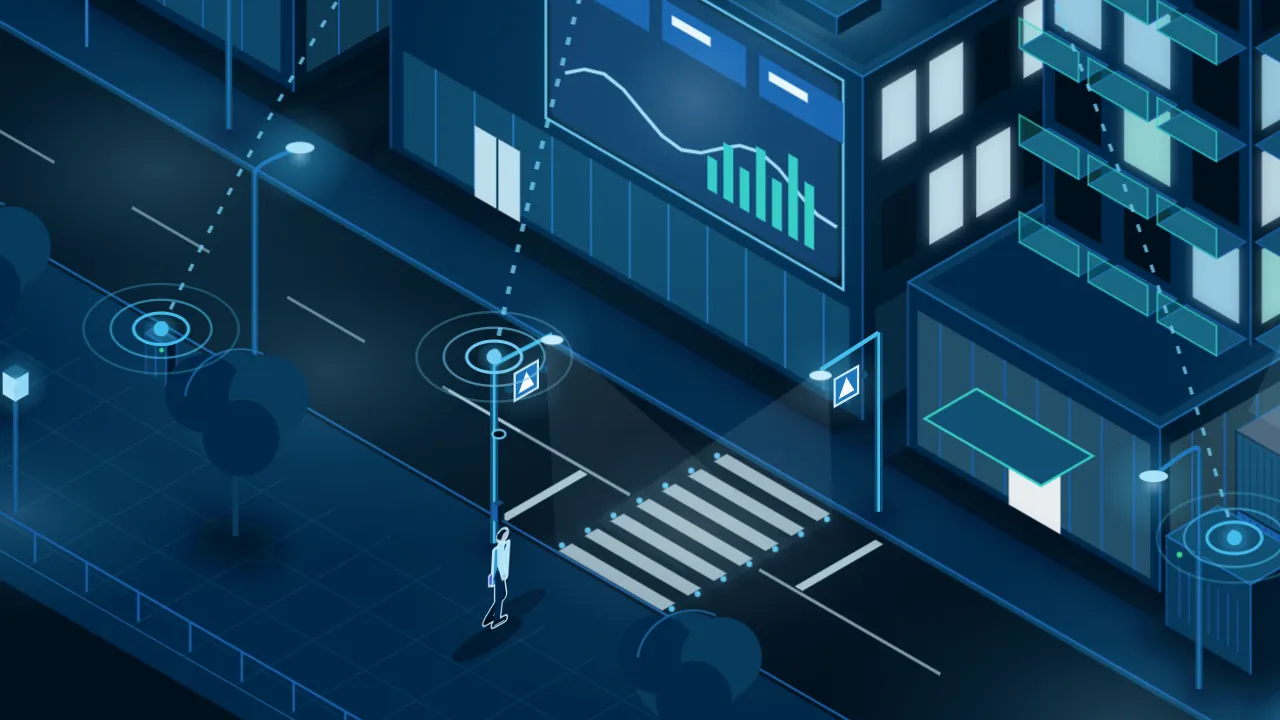
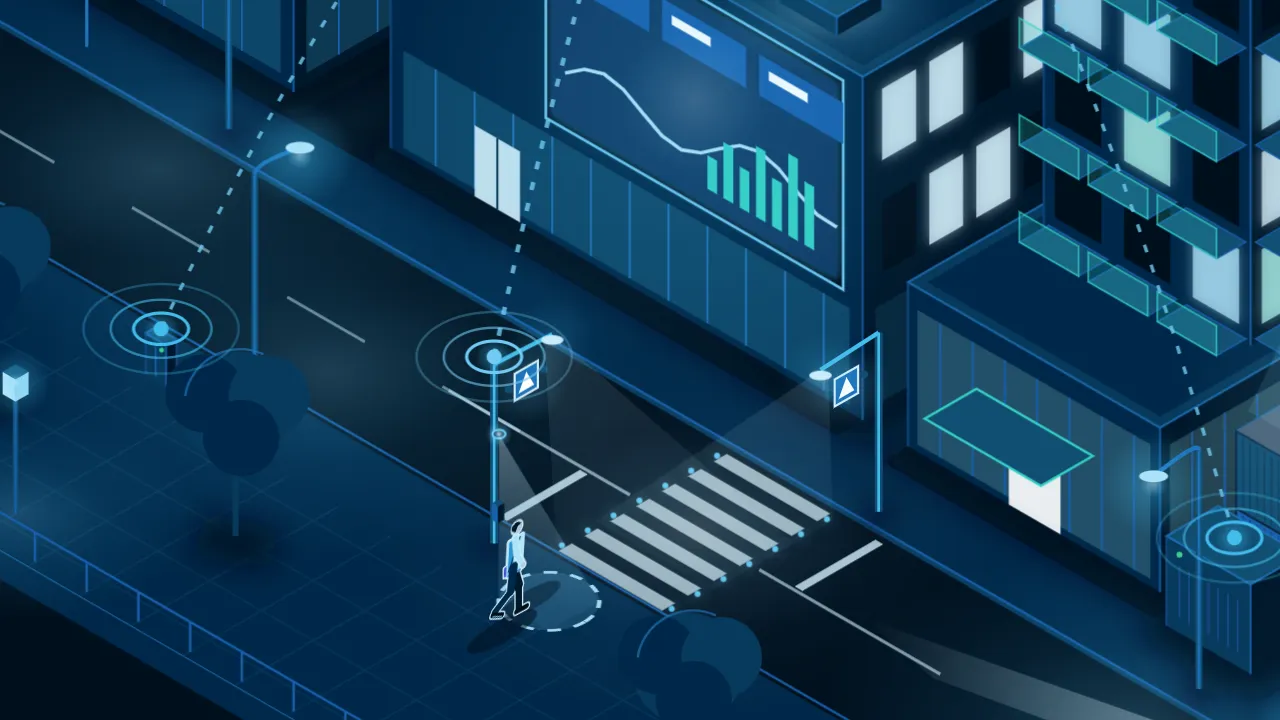
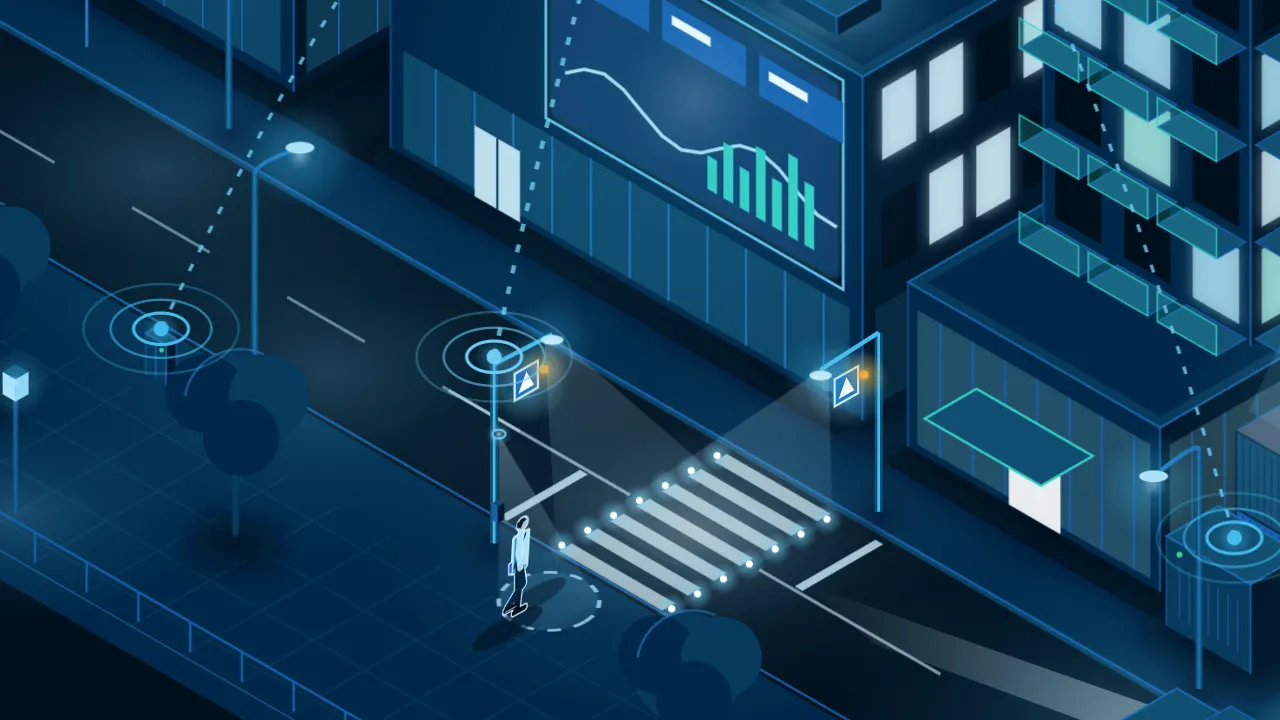
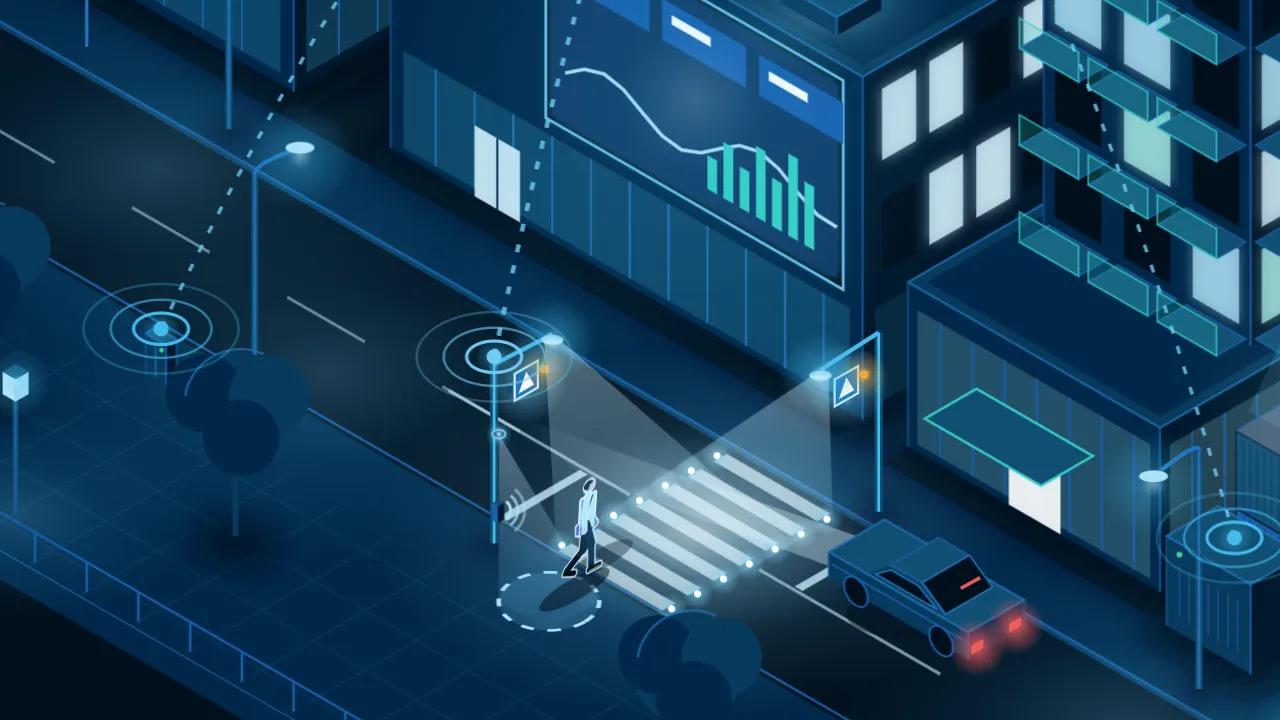
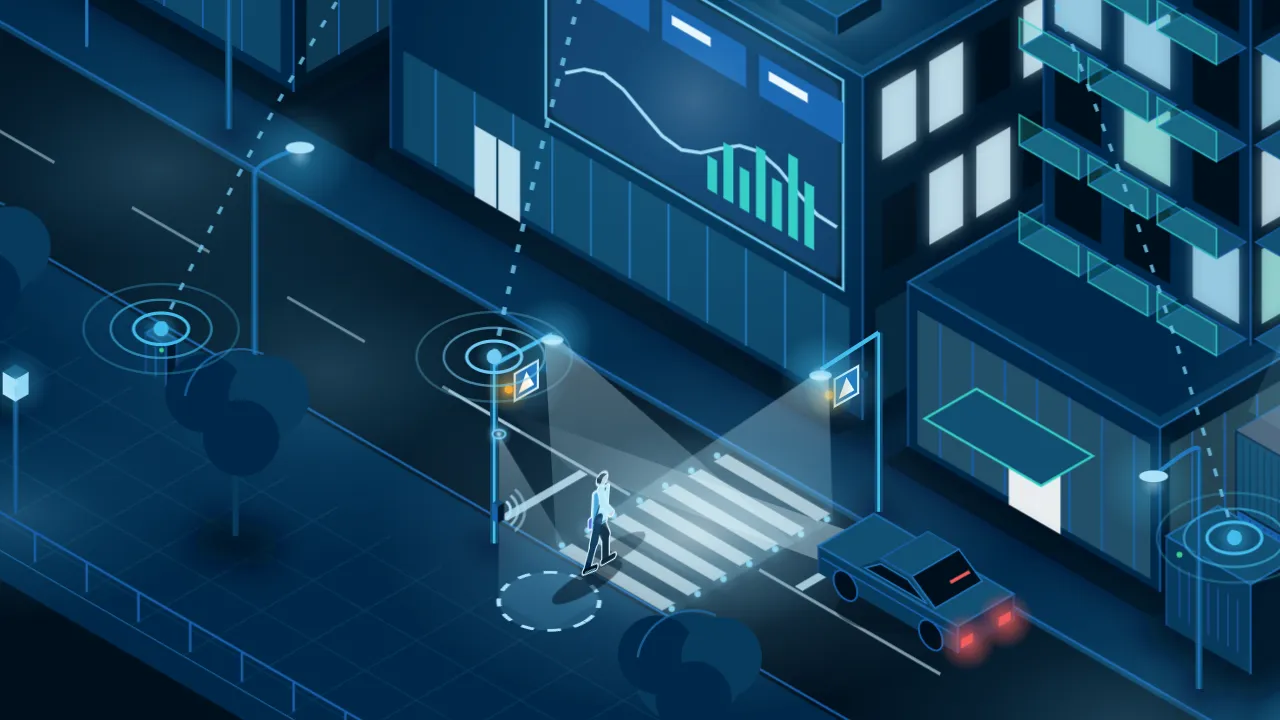
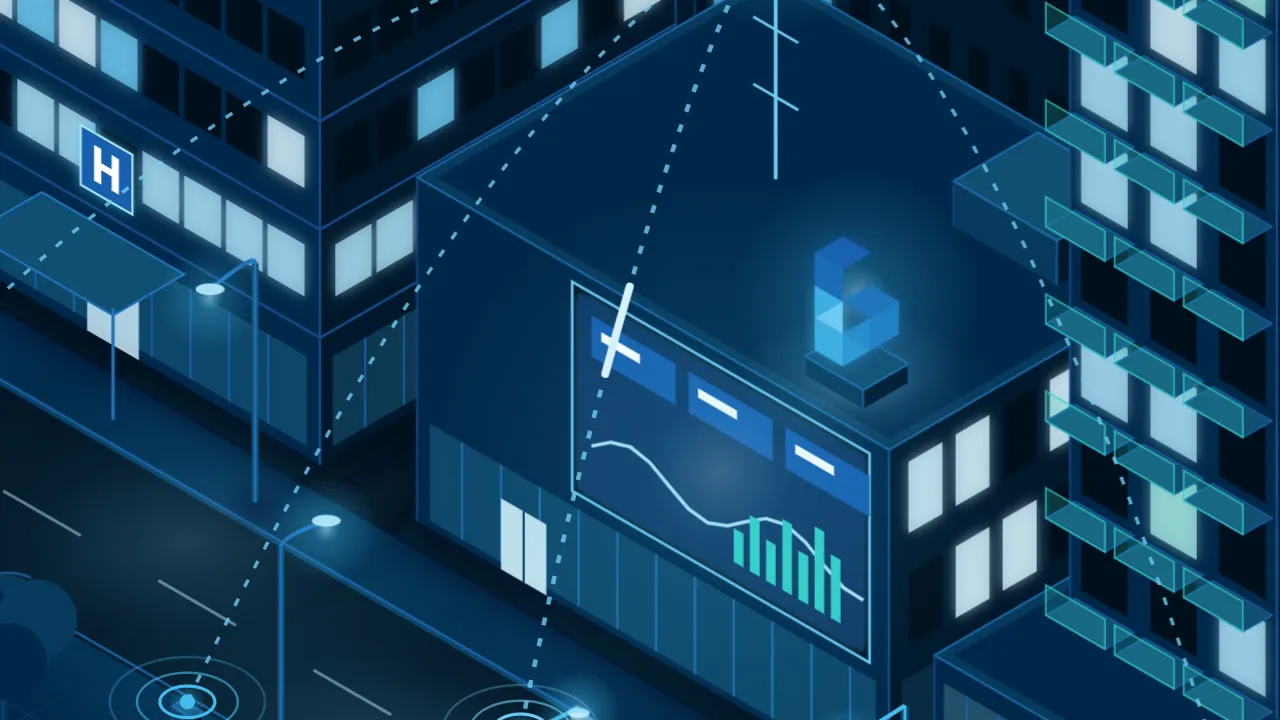
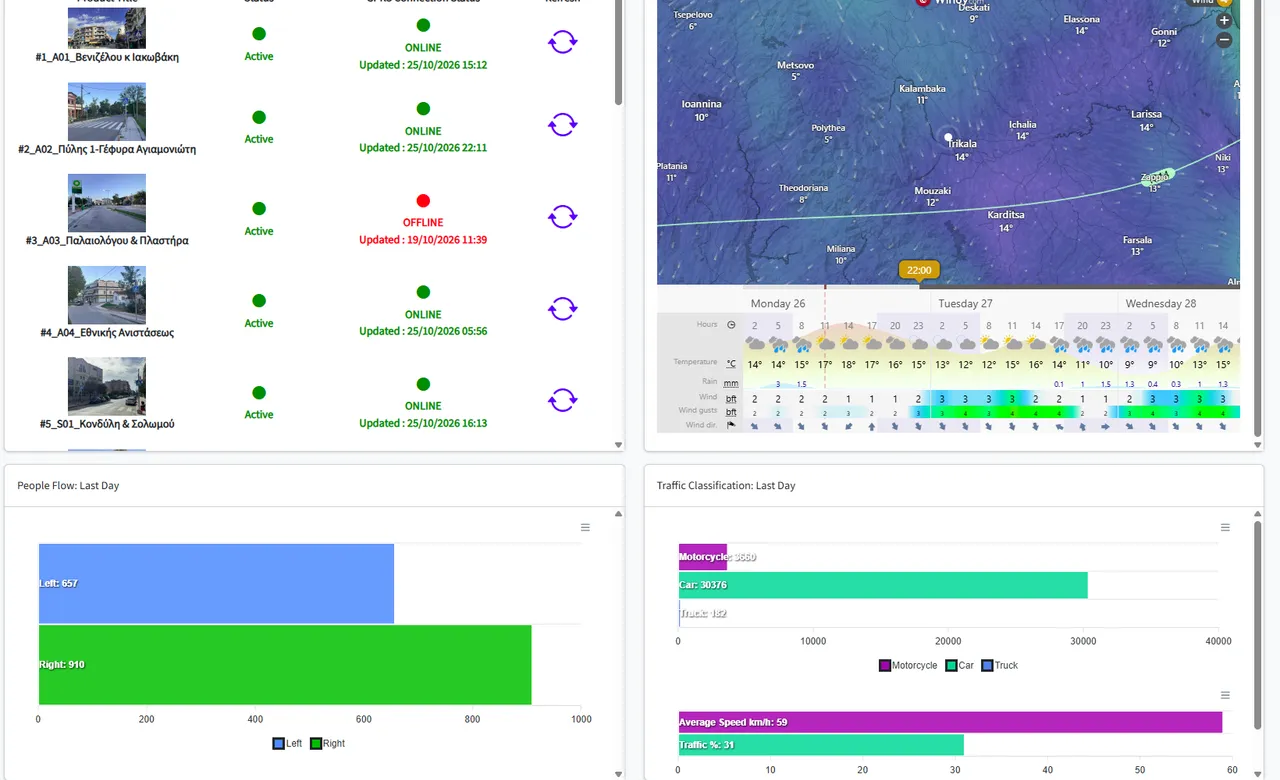
Crossing 1 · at rest, before anyone arrivesCrossing 1 · the detector at the kerbCrossing 1 · lights in the road and amber beaconsCrossing 1 · the floodlights over the zebraCrossing 1 · the audio cue on the poleThe central building · where every crossing reportsOur crossings dashboard · a real screen, people flow for the last day
What we automate
Everything a crossing needs, on one system
Safer for pedestrians, clearer for drivers: detection, warning, light, sound and data, specified with your technical service.
Pedestrian detection
The crossing senses a person approaching, before the first step onto the road.Lights in the road
They flash along the zebra while someone crosses.Flashing signs and beacons
Lit signs and amber beacons at both ends warn drivers early.Crossing floodlight
The person on the zebra is easy to see, at night and in the rain.Audio cue
Blind and partially sighted people know when to cross.Event log and hourly counts
Know how many people cross, and when, to plan your streets.Linked to the street lighting
Crossings on the same control screens as the street lighting, so one team runs both.Faults reported
A device that stops working raises an alarm on the control screen.
We define the detection, lighting, signage and accessibility features of each crossing with your technical service and the funding programme’s requirements.
See it working
Our crossings dashboard, and a crossing to try
Two real screens from our smart crossings dashboard: how many people cross, what traffic passes and which crossing has stopped reporting. Then a demo of one crossing, to try.
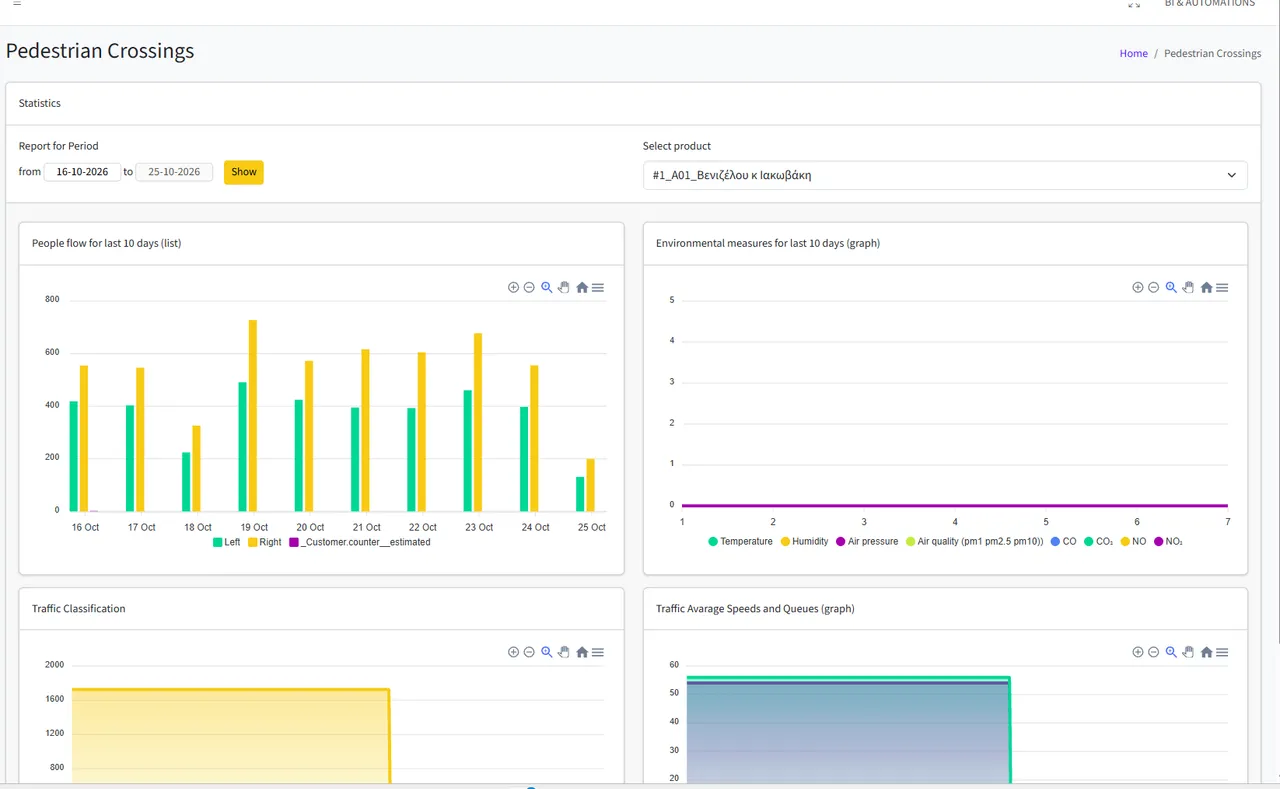
On this screen
Delivered forMunicipality of Trikala, smart pedestrian crossings
Demo · one smart crossing
Press “Simulate a pedestrian” and watch each device react. The values are simulated.
What the demo shows
- The detector Idle or Pedestrian, the moment someone arrives.
- Studs, signs and floodlight Off, flashing or on, device by device.
- The audio cue On while someone is crossing.
- The event log Every crossing with its time, for counts by hour.
- Alarms A device that stops working raises an alarm to acknowledge.
The two screens above are real. This view is a demo of one crossing’s devices, with simulated values.


Dashboard
Smart crossing · Crossing 1
Smart crossing
Crossing 1 · detector, studs, signs, floodlight, audio cue
DetectorIdle
LED studsOff
SignsOff
FloodlightOff
Audio cueOff
Event logReady
Waiting for a pedestrian.
Contact
Let’s talk about your crossings
Send us how many crossings you plan, where they are and the funding programme, if there is one. We will reply with how we would deliver them.
Or write to us